
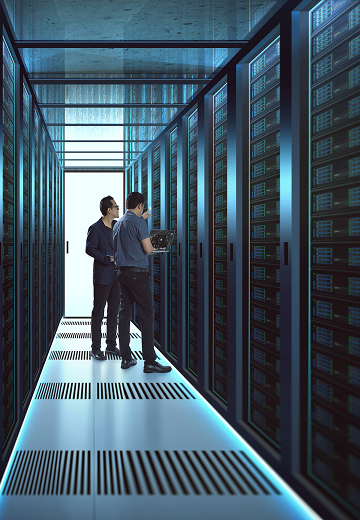
Oman’s data centre market is steadily evolving into a strategic connectivity hub, supported by growing cloud adoption, AI-driven demand and national digital initiatives under Vision 2040. Valued at approximately USD 288 million in 2025 and projected to reach around USD 492 million by 2031, the sector is expanding through a combination of colocation growth and international partnerships, including developments led by Equinix and Omantel.
With strong subsea cable connectivity and emerging green data centre initiatives, Oman is positioning itself as a regional gateway linking Asia, Africa and Europe.
As firms increasingly explore data centre investments, they must also understand their unique due diligence requirements. While these requirements can vary depending on factors such as the development stage of the asset, there are fundamental elements that should be assessed before making an investment decision.
Explore these considerations in BDO’s checklist below.
BDO’s Data Centre Due Diligence Checklist
The following key areas should be assessed when evaluating data centre investment opportunities.
Power Availability
With demand for AI increasing, investors should evaluate a data centre’s power capacity and energy requirements.
Power Supply
Assessing the age and performance of internal equipment, including transformers, switchboards, generators, distribution systems, safety devices, and back-up power supply, can help firms determine whether upgrades are needed to handle AI workloads.
Power Capacity
Examine the facility’s current capacity and forecast future needs arising from increasing AI use. Is the data centre equipped to scale operations as AI workloads increase over time?
Contract Terms and Structure
What existing energy contracts does the data centre have in place? Ideally, the facility should have a long-term energy contract, which reduces the risk of cost variability and service interruptions.
Cooling Capabilities and Environmental Impact
AI chips generate significantly higher thermal load than other types of chips and can place considerable strain on local water supplies and infrastructure, particularly in regions already facing water stress.
Cooling Method
What kind of cooling system does the data centre use? Each method — liquid, air, immersion, evaporative, hybrid, or free cooling — has different implications for the data centre’s ability to accommodate AI’s high-density computing power. Liquid and immersion cooling, for example, are considerably more efficient than air-based systems.
State of Systems
Review the efficiency of a data centre’s cooling equipment to help forecast maintenance costs and, in turn, profitability. Firms can request power usage effectiveness (PUE) ratios and maintenance logs for greater visibility during due diligence.
Water Consumption
Evaluate a data centre’s water usage and any consumption strategies the facility has in place, such as closed-loop liquid cooling systems and alternative cooling fluids. Large-scale data centres typically require significant volumes of water daily due to AI-driven cooling needs, which carry both operational and cost implications.
Noise Pollution
Assess a data centre’s noise levels from both day-to-day operations and back-up power generators. As many suburban areas seek to limit data centre development due to noise and energy consumption concerns, it is important to identify and address these risks before committing to an investment.
Workforce
Data centres often experience high turnover rates due to demanding work environments and an ageing workforce. Because they are typically built in rural areas, they are also more susceptible to labour shortages. Investors should evaluate workforce needs and assess how they may evolve over time.
Local Talent
Consider the data centre’s local talent pool. Can the available workforce support cabling, equipment maintenance, and operational needs? If not, the facility may need to accommodate workers from other regions on a temporary basis, similar to arrangements in sectors such as oil and gas, which can become costly. Some organisations are also developing talent pipelines through partnerships with local education providers.
Workforce Needs Now and in the Future
Understand how workforce requirements may change as AI capabilities mature. For example, how many personnel are needed to maintain operations? Will additional security staff be required? What training investments may be necessary? Early-stage facilities will have very different workforce needs compared to those with advanced AI infrastructure.
Specialised Talent
Data centre professionals with specialised skills, including advanced AI expertise, are in high demand and may expect higher compensation packages. Talent poaching is increasingly common. Review compensation structures, benefits, and recruitment strategies to understand the cost of turnover, availability of talent, and competitive pressures.
Security
A data centre’s security directly influences the long-term viability and value of an investment, as a breach — whether physical or digital — can result in serious consequences.
Physical Facility Protection
Assess defence-in-depth capabilities to manage access points and vulnerabilities. Unauthorised access remains a risk, particularly in colocation environments. A comprehensive security plan should include vehicle blockades, cage systems, door hinges, and other protective measures. Facilities serving high-risk sectors such as critical infrastructure, defence, or government contractors may require more advanced security investments.
Cybersecurity
Review digital defence capabilities, including identity and access management, surveillance systems, and incident response processes. The business model should determine control levels, supported by an effective information security management system. Network monitoring and response procedures directly impact tenant data protection and regulatory compliance.
Disaster and Recovery Risks
Assess environmental risk factors and their potential impact on infrastructure. Is the facility located near a disaster-prone zone? What resilience measures are in place to withstand severe weather or other disruptions?
Regulatory Requirements
Data centres are heavily regulated due to their resource usage and links to sectors handling sensitive information, such as healthcare and financial services. Understanding regulatory obligations based on tenant profiles is essential for maintaining an accurate risk assessment.
State and Local Reporting Requirements
Assess relevant state or local rules, as these may significantly affect reporting obligations and compliance costs.
AI and Cybersecurity Compliance
Verify that the data centre complies with all applicable regulations. Investors should ensure alignment with recognised standards such as ISO 27001 or NIST frameworks.
Emerging Regulations
Anticipate future regulations related to alternative energy sources, including nuclear power, which is gaining traction as a data centre energy solution. These developments may impact both costs and timelines.
Third-Party Attestation
Request third-party attestations and certifications to verify compliance. SOC 1 and SOC 2 are baseline requirements, although additional certifications may be required depending on tenant needs, such as healthcare-related compliance.
Real Estate Leasing
Understanding real estate leasing terms is essential for accurately modelling a data centre’s cash flow stability.
Lease Terms
Prioritise facilities with longer lease durations, such as 15+ years, and favourable structures. A triple net lease (NNN) is often ideal, with tenants covering operating expenses including taxes, insurance, and maintenance.
Tenants
Verify tenant creditworthiness to ensure stable long-term cash flows. Consider alternative uses for the facility should tenants exit.
Customer Concentration Risk
Assess the number and diversity of tenants. A concentrated tenant base may increase exposure to cash flow risks.
Original content provided by BDO USA.
How BDO Oman Can Help
BDO Oman provides partner-led advisory, consulting and due diligence services for investors and operators seeking to enter or expand within Oman’s emerging data centre market. Combining deep local expertise with global sector insight, we support clients across the full investment lifecycle, from feasibility studies and business planning to transaction advisory, financial modelling and operational due diligence.
Drawing on our experience in infrastructure, technology and cross-border investments, we work closely with clients to assess market entry strategies, optimise investment structures and navigate regulatory and operational considerations in a connectivity-driven and rapidly evolving digital landscape.
If you are evaluating opportunities in Oman’s data centre ecosystem, our team can help you identify risks, validate assumptions and unlock long-term value with clarity and confidence.
CONTACT OUR TEAM